


Sargasso Forecast: How Caribbean Beaches are Trying to Adapt and Thrive
 by Zoom Playa on June 9, 2026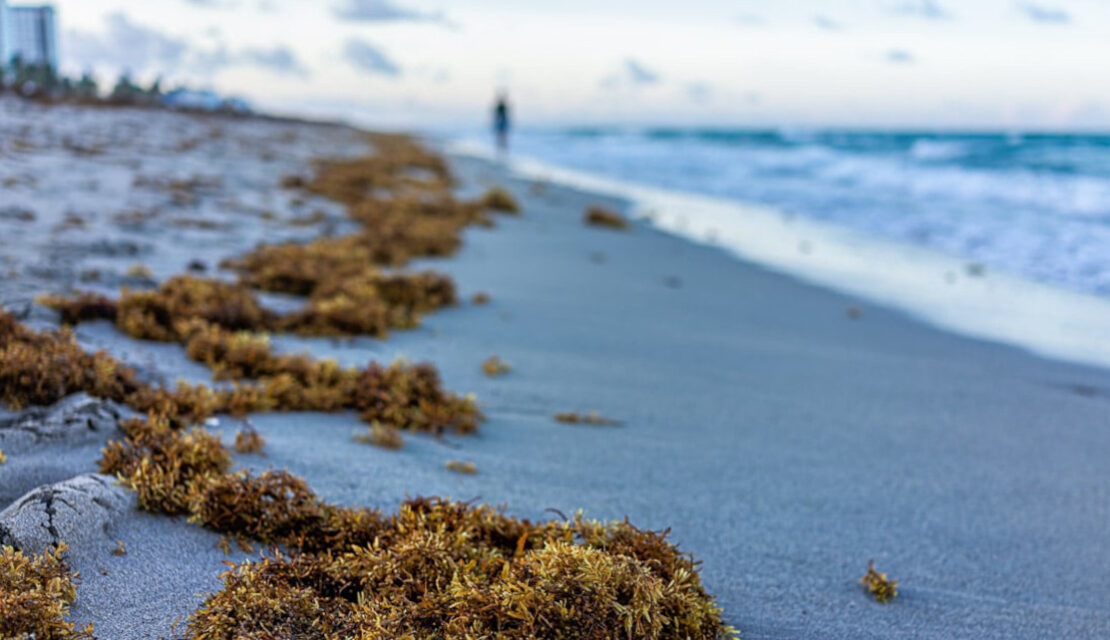
When turquoise waves meet golden sand, the Caribbean has long represented the ultimate paradise; but in recent years, a natural phenomenon has captured global attention: sargasso seaweed. From the shores of Playa del Carmen to the beaches of Barbados and Florida, this floating brown seaweed has become a defining environmental challenge—and opportunity—for the entire Caribbean basin. What began as mysterious blooms in 2011 has evolved into a region-wide response that’s sparking innovation, international collaboration, and breakthrough technologies. For those considering Riviera Maya real estate investment or planning Caribbean vacations, understanding sargasso – which is different from red tide – is essential. But here’s the good news: the Caribbean is adapting, innovating, and turning crisis into opportunity. Tourism in Quintana Roo continues to grow year after year, infrastructure improves steadily, and entrepreneurs worldwide are transforming this seaweed into valuable products. This comprehensive guide explores what sargassum is, why it’s appearing in unprecedented volumes, how Caribbean nations are responding, and why the future looks increasingly promising for this resilient region.
Table of Contents
- What is Sargasso/Sargassum?
- The 2011-2012 Bloom: Where It All Started
- The Great Atlantic Sargasso Belt
- Why Are We Seeing More Each Year?
- Countries Affected Across the Caribbean & Beyond
- What Each Country Is Doing About It
- Challenges & Boundaries
- Entrepreneurs Turning Crisis Into Opportunity
- Innovative Products Being Built Now
- What’s Coming in the Future
- Monitoring & Satellite Tracking
- Impact on Tourism & Real Estate Investment
- Frequently Asked Questions
- Conclusion
.
What is Sargasso / Sargassum?
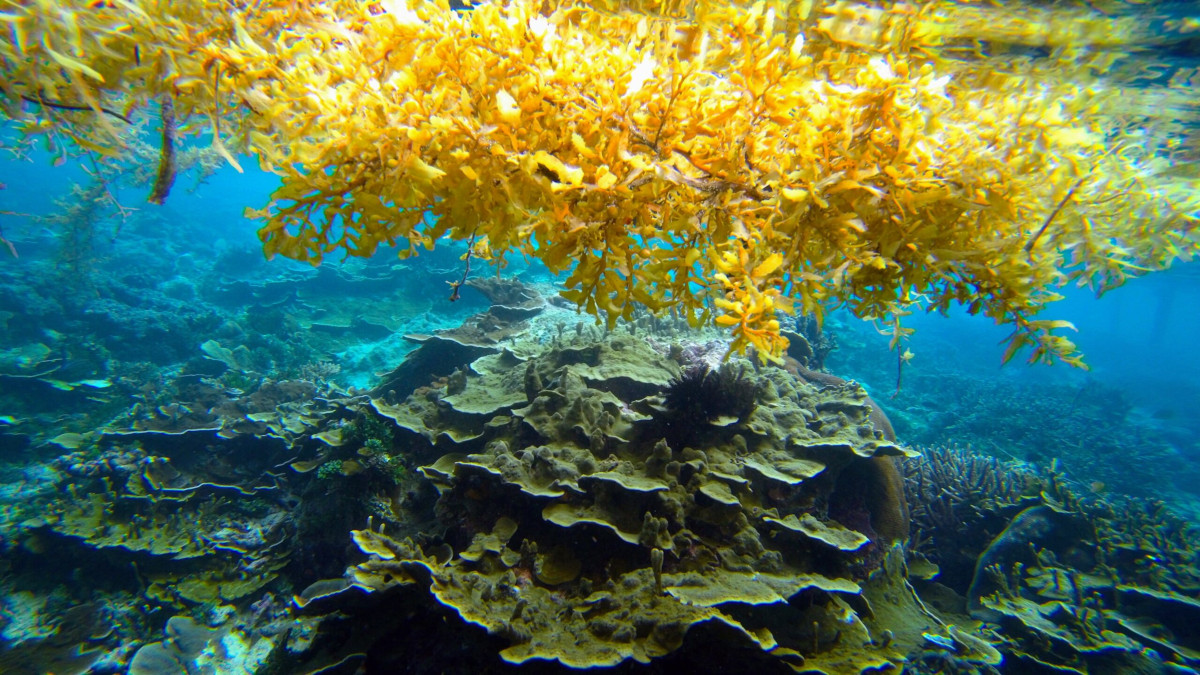
Sargassum is not the same as Red Tide. It is a genus of brown macroalgae (seaweed) that has floated in the world’s oceans for millions of years. Unlike most seaweeds that anchor to the ocean floor, sargassum is holopelagic—meaning it spends its entire lifecycle floating freely in open water. The plant reproduces vegetatively through fragmentation, with each piece capable of growing into a new mat of seaweed. For centuries, sailors navigating the Atlantic Ocean reported vast floating meadows of this golden-brown seaweed, particularly in the region east of the Caribbean known as the Sargasso Sea.
Historically, sargasso has played a crucial ecological role. These floating rafts create miniature ecosystems supporting hundreds of marine species, including juvenile sea turtles, fish, crabs, and shrimp. The EPA recognizes sargassum as vital habitat for biodiversity in the open ocean. For most of recorded history, sargasso remained offshore in relatively predictable patterns, rarely washing ashore in significant quantities.
Two primary species dominate recent Caribbean blooms: Sargassum natans and Sargassum fluitans. Both feature distinctive gas-filled bladders (pneumatocysts) that keep them buoyant. When healthy and offshore, these plants oxygenate water and sequester carbon. However, when massive quantities wash ashore and decompose, they release hydrogen sulfide—the source of the characteristic rotten-egg smell—and can temporarily deplete oxygen in nearshore waters.
The 2011-2012 Sargasso Bloom: Where It All Started
Something unprecedented happened in 2011. Beaches across the eastern Caribbean, from Barbados to Martinique, suddenly experienced massive influxes of sargassum seaweed. By 2012, the phenomenon had spread to Mexico’s Caribbean coast, transforming pristine beaches in Tulum and Cancun seemingly overnight. What had been a minor, seasonal occurrence became a year-round challenge requiring industrial-scale response.
Scientists initially struggled to explain the sudden explosion. Traditional sargassum sources—the Sargasso Sea northeast of the Caribbean—couldn’t account for the sheer volume. Satellite imagery revealed something remarkable: a new, massive accumulation zone had formed in the equatorial Atlantic Ocean, stretching from West Africa to the Caribbean basin. This wasn’t a temporary anomaly—it was a fundamental shift in ocean ecology.
The 2011 event marked the beginning of what researchers now recognize as the new normal. Each year since has brought varying intensities of sargassum, with 2015, 2018, 2019, 2022 and 2026 being particularly heavy. The Caribbean sargassum phenomenon is no longer a curiosity—it’s a permanent feature requiring adaptive management, innovative technology, and international coordination.
The Great Atlantic Sargasso Belt
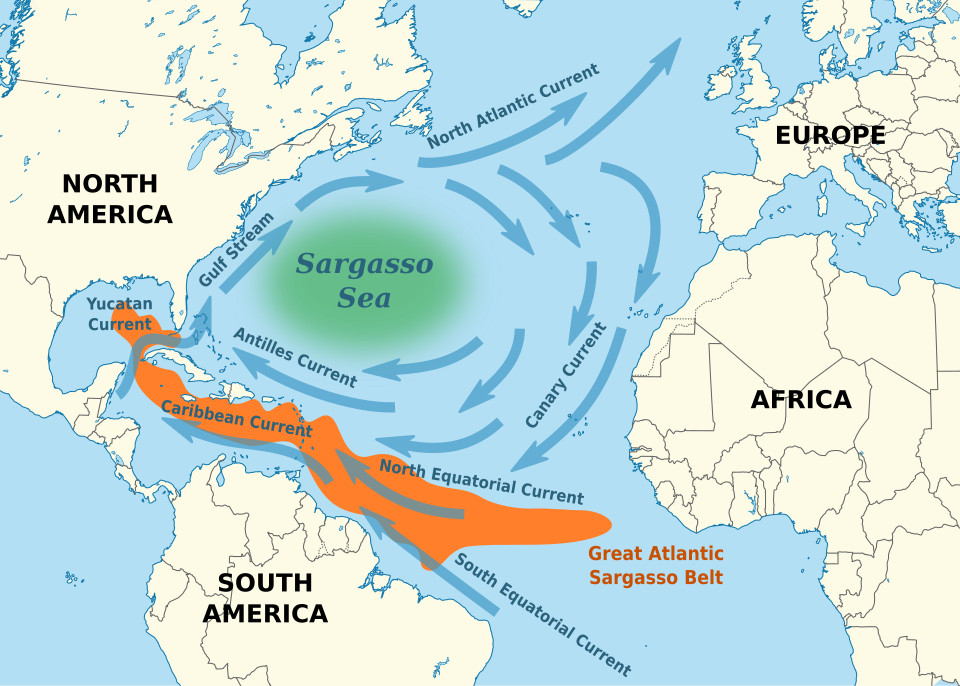
In 2019, researchers at the University of South Florida published landmark findings documenting what they termed the Great Atlantic Sargassum Belt—the largest macroalgae bloom on Earth. This belt stretches over 5,000 miles from the west coast of Africa to the Gulf of Mexico and Caribbean Sea, containing an estimated 20 million tons of sargassum at peak accumulation. Satellite monitoring revealed that this belt has persisted and expanded since 2011, forming a reliable annual pattern.
The belt’s formation represents a perfect storm of oceanographic conditions. Ocean currents carry sargassum westward from African coastal waters through the equatorial Atlantic. Once in the Caribbean, circular current patterns trap and concentrate the seaweed, while prevailing winds and currents push accumulations toward the eastern Caribbean islands and the Mexican Caribbean coast. During peak season—typically April through August—massive rafts of sargassum move toward shore in predictable waves.
Understanding the belt’s dynamics has proven crucial for prediction and response. The NOAA Sargassum Watch System now provides daily updates tracking sargasso density and movement, enabling communities to prepare for incoming waves and tourists to plan accordingly. This predictive capability represents a major advancement in Caribbean sargassum management.
.
Why Are We Seeing More Sargasso Each Year?
The explosion of Caribbean sargassum results from multiple converging factors. Unlike single-cause environmental problems, sargassum proliferation reflects complex interactions between climate change, agricultural practices, ocean currents, and atmospheric patterns. Understanding these drivers helps explain why simple solutions remain elusive—and why comprehensive, multi-national approaches offer the most promise.
Climate and Ocean Temperature Changes
Rising ocean temperatures create favorable conditions for sargassum growth. The tropical Atlantic has warmed measurably over the past three decades, accelerating photosynthesis and reproduction rates for sargassum. Warmer waters also alter nutrient cycling, bringing deep-water nutrients toward the surface where sargassum thrives. Climate models suggest these temperature trends will continue, making sargassum management a long-term rather than temporary challenge.
Changing ocean circulation patterns also play a role. The North Atlantic Oscillation and other large-scale climate patterns influence current speeds and directions, affecting where sargassum accumulates and when it reaches Caribbean shores. Some years feature stronger circulation that disperses sargassum more widely; other years see weaker currents that allow massive accumulations in the belt.
Nutrient Sources: Amazon Runoff and Sahara Dust
Sargasso, like all plants, requires nutrients—particularly nitrogen and phosphorus—to grow. Two major sources feed the Great Atlantic Sargassum Belt. First, agricultural runoff from the Amazon River basin carries massive quantities of fertilizers into the Atlantic Ocean. Deforestation and intensified agriculture in Brazil have increased nutrient discharge significantly since 2000, coinciding with the timing of sargasso proliferation.
Second, Sahara Desert dust storms deposit iron and other nutrients across the Atlantic. These dust events have increased in frequency and intensity due to drought patterns in North Africa. When dust settles on ocean surfaces, it provides micronutrients that boost sargasso growth. The combination of Amazon nutrients and Saharan dust creates ideal conditions for explosive algae reproduction.
Addressing these nutrient sources requires international cooperation at unprecedented scales—upstream agricultural practices in South America, climate adaptation in Africa, and coordinated Caribbean response. While challenges are significant, the multinational nature of the problem has sparked exactly this kind of collaboration, as detailed in later sections.
Countries Affected Across the Caribbean & Beyond
Caribbean sargassum is truly a regional challenge, affecting nearly every Caribbean and Gulf nation. The severity varies by location, season, and year, but virtually all coastal communities from Texas to Brazil have experienced sargassum influxes since 2011. Understanding the geographic scope helps contextualize the problem—and the coordinated response taking shape.
Mexico: Riviera Maya and Quintana Roo
Mexico’s Caribbean coast—particularly Quintana Roo—has emerged as ground zero for sargassum management innovation. Playa del Carmen, Tulum, and Cancun collectively welcome over 30 million tourists annually, making beach quality paramount to the regional economy. Sargassum typically arrives in waves between March and September, with peak accumulations in May and June.
The Mexican Navy operates the most sophisticated sargassum response in the Caribbean, deploying specialized vessels with harvesting equipment to collect seaweed before it reaches shore. Coastal municipalities employ thousands of workers during peak season, collecting and removing sargassum daily. Major resorts have invested millions in barriers, collection equipment, and processing facilities. The Inter-American Development Bank has recognized Mexico’s efforts as a model for other Caribbean nations, particularly its focus on converting sargasso into valuable products rather than merely disposing of it.
Belize, Guatemala, and Honduras
Central America’s Caribbean coastlines face similar challenges with fewer resources. Belize’s tourism industry, centered on pristine beaches and the Barrier Reef, has mobilized community-based collection programs. Guatemala’s small Caribbean coastline near Livingston experiences seasonal influxes requiring manual removal. Honduras, particularly the Bay Islands popular with divers and beachgoers, has implemented monitoring systems and launched small-scale conversion projects exploring sargasso as agricultural fertilizer.
Jamaica, Cayman Islands, Dominican Republic, and Puerto Rico
The Greater Antilles islands sit directly in the path of westward-moving sargassum. Jamaica has experienced some of the Caribbean’s heaviest accumulations, particularly along southern and eastern coasts. The government established a National Sargassum Task Force coordinating removal, monitoring, and research efforts. Grand Cayman and the other Cayman Islands deploy mechanical equipment and hand crews, with particular focus on protecting the tourism-critical Seven Mile Beach.
The Dominican Republic, home to Punta Cana and other major resort zones, has invested heavily in offshore barriers and mechanical collection. Resort zones maintain largely sargassum-free conditions through continuous management. Puerto Rico has integrated sargasso response into broader coastal management programs, with particular attention to protecting critical habitats where sargassum decomposition could harm sensitive ecosystems.
Lesser Antilles: Barbados, St. Lucia, and Beyond
The Lesser Antilles chain—from Barbados to the Virgin Islands—represents the Caribbean’s eastern front line. These islands often experience the earliest and sometimes heaviest sargassum arrivals. Barbados has pioneered research into sargassum’s economic potential, hosting conferences and supporting startups focused on seaweed conversion. St. Lucia, Martinique, Guadeloupe, and other islands have developed cooperative monitoring networks sharing real-time data about incoming sargassum waves.
United States: Florida and Texas
Florida’s Atlantic coast and the Florida Keys experience variable sargassum influxes, generally less severe than Caribbean islands but still requiring management during peak years. South Florida beaches from Miami to Palm Beach implement seasonal removal programs. Texas’s Gulf Coast, particularly South Padre Island, has seen increasing sargassum since 2014. Both states benefit from well-funded coastal management programs and university research initiatives studying sargasso ecology and utilization.
Brazil’s Northern Coast
Brazil’s northern and northeastern coastlines—from Amapá to Bahia—have experienced escalating sargassum accumulations since 2017. The proximity to the Amazon River mouth and location relative to the Great Atlantic Sargassum Belt make this region particularly vulnerable. Brazilian researchers have launched initiatives examining sargassum’s agricultural potential and its impacts on coastal fishing communities dependent on clean beaches for artisanal fisheries.
.
What Each Country Is Doing About Sargasso
Caribbean governments have mobilized unprecedented resources to manage sargassum. Responses vary based on available funding, coastline length, and tourism dependence, but common elements include monitoring systems, removal operations, research investments, and increasingly, conversion projects that transform sargassum from waste into resources.
Mexico leads in operational scale, deploying naval vessels equipped with nets and conveyors that harvest sargassum at sea. The Mexican government allocated over $80 million USD for sargasso management in 2022-2023, funding both removal and research into commercial applications. Municipal governments in Quintana Roo employ hundreds of temporary workers during peak season, operating heavy equipment on beaches to collect and transport sargassum to processing facilities.
Increasingly, governments are shifting from pure removal toward utilization. Several Caribbean nations now offer incentives for sargassum-based enterprises, recognizing that converting the seaweed into products creates economic value while reducing disposal costs. This strategic pivot represents a maturation in sargasso management—from crisis response to sustainable opportunity.
Challenges & Boundaries of Sargasso
Despite remarkable progress, significant challenges remain. Sargasso removal at sea is expensive and technically demanding. Ocean conditions limit when vessels can safely operate. Collected sargassum is heavy, bulky, and highly saline, creating transportation and disposal logistics challenges. Many Caribbean islands lack landfill capacity for the volumes involved, making composting, conversion, or ocean disposal the only options—each with environmental considerations.
Funding remains a perennial challenge. Peak season removal operations cost millions of dollars annually. Many island nations lack budget capacity for sustained programs. International aid has helped, but long-term sustainability requires either permanent funding mechanisms or successful conversion into revenue-generating products.
Ecological tradeoffs complicate decision-making. Offshore harvesting reduces beach accumulation but removes floating habitat for marine life. Some removal techniques disturb seafloor ecosystems. Finding the balance between protecting beaches and preserving marine biodiversity requires ongoing scientific assessment and adaptive management.
Yet these challenges are being actively addressed. International development banks are funding infrastructure investments. Research consortia are refining best practices. Entrepreneurs are proving that sargassum conversion can be profitable. The challenge is real, but so is the progress.
Entrepreneurs Turning Crisis Into Opportunity
Perhaps the most promising development in the sargassum story is the emergence of an innovation ecosystem transforming seaweed from liability to asset. Entrepreneurs across the Caribbean, Latin America, United States, and beyond are launching ventures that convert sargassum into commercially valuable products. These enterprises offer a sustainable path forward—one where sargassum collection generates revenue rather than merely imposing costs.
Caribbean startups are pioneering agricultural applications. Sargasso is rich in potassium, making it an excellent fertilizer component when properly processed to remove salt. Composting operations across the region are producing soil amendments for local agriculture, reducing dependence on imported fertilizers while solving a waste problem. Several Mexican companies now export processed sargassum fertilizer internationally.
Construction materials represent another breakthrough sector. Multiple companies have successfully demonstrated that sargassum can partially replace cement or aggregate in concrete and building blocks, reducing both construction costs and carbon emissions. Fashion and textiles ventures are exploring sargassum-based fabrics and leather alternatives, with Vogue profiling companies developing what they call “the cashmere of the ocean”—luxurious textiles from processed seaweed fibers.
Cosmetics and personal care products utilize sargassum extracts rich in minerals and antioxidants. Biofuel research is advancing rapidly, with sargassum’s high biomass production making it a promising feedstock. Each successful venture validates the economic case for sargassum harvesting and processing, gradually shifting the paradigm from waste management to resource industry.
Innovative Products Being Built Now
The range of products emerging from sargassum innovation is remarkable. Carbonwave, a Caribbean-based company, has developed processes for extracting chemicals used in food additives, cosmetics, and industrial applications. Their technology platform treats sargassum as a raw material source rather than waste, opening multiple revenue streams from a single feedstock.
Seafields is scaling up sargassum cultivation and harvesting technology with carbon sequestration goals. By intentionally farming sargassum in controlled ocean environments and then sinking harvested biomass to the deep ocean floor, they aim to capture atmospheric carbon at scale while generating revenue from processed portions used in industrial applications. This approach could transform sargassum from climate problem to climate solution.
Admix Innovations has perfected sargassum concrete, demonstrating that processed seaweed can replace up to 30% of cement in certain concrete applications. Given that cement production generates approximately 8% of global carbon emissions, this innovation addresses two environmental challenges simultaneously. Pilot projects across the Caribbean are proving commercial viability.
Dakatso Group with the development of a new SargaCreto plant transforms sargassum seaweed into eco-friendly concrete and construction materials. By converting this natural waste into durable building products, the project supports environmental conservation, reduces landfill disposal, and promotes a circular economy. The plant represents an important step toward creating sustainable infrastructure solutions for the Riviera Maya while helping protect the region’s beaches and ecosystems.
One particularly exciting venture turns sargassum into fertilizer, leather, and cosmetics through an integrated processing facility. By extracting multiple product streams from the same raw material, they maximize economic return while ensuring no portion goes to waste. Such integrated biorefinery approaches represent the future of sargassum utilization.
Academic researchers continue discovering new applications. Recent studies explore sargassum in pharmaceuticals, animal feed supplements, paper production, and packaging materials. Each validated use case strengthens the economic argument for systematic harvesting and processing infrastructure.
.
What’s Coming in the Future
The trajectory is clear: sargassum management is transitioning from emergency response to systematic industry. International organizations are mobilizing significant resources and coordination mechanisms. The Food and Agriculture Organization (FAO) has convened working groups examining sargassum utilization in food systems and agriculture. Their research supports scaling successful pilot projects across the Caribbean and beyond.
The Inter-American Development Bank (IADB) continues funding infrastructure investments enabling countries to build permanent processing capacity. Rather than temporary removal operations, these investments create facilities that continuously convert sargassum into products, generating employment and revenue year-round. Several Caribbean nations are developing sargassum industrial zones specifically designed for processing operations.
EU-Caribbean partnerships are advancing research and technology transfer. European expertise in seaweed processing and biomass conversion is being adapted for tropical conditions and Caribbean species. Joint research initiatives are accelerating innovation cycles, bringing laboratory discoveries to commercial scale faster than ever before.
MIT Solve, Invest Puerto Rico, and other innovation platforms are connecting entrepreneurs with investors, technical expertise, and market access. Sargasso ventures are attracting venture capital and impact investment, signaling that financial markets recognize both the environmental imperative and economic opportunity. As capital flows in, innovation accelerates.
Perhaps most importantly, regional cooperation frameworks are maturing. What began as isolated national responses has evolved into coordinated Caribbean-wide strategy. Monitoring networks share real-time data. Research consortia avoid duplicative efforts. Successful technologies and practices disseminate rapidly across borders. This collaborative approach positions the Caribbean to not just manage sargassum, but to lead global marine biomass utilization.
Monitoring & Satellite Tracking of Sargasso
Effective sargassum management begins with knowing where it is and where it’s heading. Satellite monitoring systems have transformed Caribbean sargassum response from reactive to proactive. Multiple platforms now provide daily updates on sargassum location, density, and movement, enabling communities and tourism operators to prepare for incoming waves.
The Sargassum Monitoring Hub aggregates data from multiple satellites and research institutions, providing free access to anyone tracking sargassum. Their maps show current distribution across the Caribbean and project movement based on ocean current models. Tourism operators, municipalities, and resort managers check these forecasts daily during peak season.
NOAA’s Sargassum Watch System provides daily inundation risk assessments for specific beach areas. Rather than just showing where sargassum is offshore, this tool predicts likelihood of beach accumulation based on seaweed density, current patterns, and wind conditions. This actionable intelligence helps tourism operators and travelers make informed decisions.
For travelers planning Caribbean vacations, Travel Pirates maintains updated reports on current beach conditions across popular destinations. Their practical guides help tourists choose the best times and locations for sargassum-free experiences. Similarly, Tulum Times publishes seasonal forecasts for Mexico’s Caribbean coast, noting that 2026 projections suggest three distinct waves with manageable intensity.
This monitoring infrastructure provides the data foundation for everything else—removal operations, tourism planning, research, and increasingly, commercial harvesting operations that view sargassum forecasts as crop projections rather than threat assessments.
Impact on Tourism & Real Estate Investment
The question every potential investor and homebuyer asks: how has sargassum affected Caribbean tourism and real estate values? The data tells an encouraging story. Yes, sargasso has required adaptation and investment. But the Caribbean’s fundamental appeal remains intact, and tourism continues growing despite this challenge.
Quintana Roo provides the clearest case study. Despite sargassum appearing annually since 2015, tourism arrivals have increased every year except the pandemic-affected 2020. Cancun International Airport set new passenger records in 2022, 2023, and 2024. Playa del Carmen real estate continues attracting investors, with new development projects launching continuously. Tulum has experienced explosive growth in both tourism infrastructure and property values.
Why? Because the Riviera Maya offers what few destinations can match: pristine beaches, ancient culture, world-class cuisine, adventure activities, and accessibility combined with exceptional value. Sargassum is managed effectively—beaches are cleaned daily during peak season, major resort zones deploy barriers and offshore collection, and monitoring systems enable informed planning. Travelers increasingly understand that sargassum is seasonal and manageable, not a permanent condition.
Real estate investment fundamentals remain strong. International buyers continue purchasing vacation properties, rental investments, and retirement homes across the Caribbean. The Cancun condominium market shows particular strength, with oceanfront properties maintaining value appreciation. Investors recognize that temporary environmental challenges don’t undermine long-term value when infrastructure and management systems respond effectively—which they have.
Moreover, the innovation ecosystem emerging around sargassum is creating new economic opportunities. Municipalities that successfully manage sargassum and develop utilization industries are positioning themselves as resilient, forward-thinking communities—exactly the characteristics sophisticated investors seek. The Caribbean’s response to sargassum demonstrates adaptability and innovation capacity that strengthens rather than weakens the long-term investment case.
For prospective buyers considering Riviera Maya properties, the data is reassuring. Property values continue appreciating. Rental demand remains strong. Infrastructure investments in sargasso management protect coastal assets. And as conversion industries mature, sargassum may even become an economic asset for coastal communities. The Caribbean isn’t just surviving this challenge—it’s building resilience and innovation that will serve the region for decades.
.
Frequently Asked Questions
What exactly is sargassum?
Sargassum is a type of brown seaweed that floats freely in ocean waters rather than attaching to the seafloor. It’s been present in the Atlantic Ocean for millions of years but has proliferated dramatically since 2011 due to increased nutrients and favorable ocean conditions. While it provides important marine habitat offshore, massive accumulations washing onto Caribbean beaches create management challenges.
Is sargassum dangerous to humans?
Fresh sargassum floating in the ocean is harmless to swimmers. However, decomposing sargassum on beaches releases hydrogen sulfide gas, which has a rotten-egg smell and can cause respiratory irritation, headaches, and nausea in sensitive individuals with prolonged exposure. Beaches are safe once sargassum is removed. Swimming in areas with fresh, floating sargassum poses no health risk beyond minor nuisance.
Is it safe to swim when there’s sargassum in the water?
Yes, swimming in water with floating sargassum is safe. The seaweed itself is not toxic or dangerous. Some swimmers find it annoying, but it poses no health hazard. Beaches with active removal programs clear accumulations quickly, and monitoring systems help tourists identify the clearest beaches. Most Caribbean resort areas maintain excellent beach conditions even during peak sargassum season.
When is sargassum season in the Caribbean?
Sargassum typically arrives in the Caribbean between March and September, with peak accumulations usually occurring from April through July. However, exact timing varies by location and year. Satellite monitoring systems now provide forecasts enabling travelers to plan around heavier periods. Winter months (November through February) generally see minimal sargassum across most Caribbean destinations.
Will sargassum ruin my Caribbean vacation?
No. While sargassum has affected some Caribbean beaches during parts of the year, tourism infrastructure has adapted effectively. Major resort areas deploy removal equipment and barriers ensuring beach quality. Monitoring websites let you check conditions before and during your trip. Many beaches remain sargassum-free even during peak season, and management has improved dramatically since the early years. Millions of tourists continue enjoying Caribbean vacations annually.
Does sargassum affect Caribbean property values?
Evidence suggests sargassum has not fundamentally undermined real estate values in well-managed areas. Riviera Maya property markets continue growing despite annual sargassum seasons. Effective management systems, monitoring infrastructure, and emerging utilization industries have mitigated concerns. Properties in areas with strong sargassum response programs maintain value appreciation comparable to pre-2011 trends. Long-term investors recognize that managed environmental challenges don’t eliminate the Caribbean’s fundamental appeal.
What is being done to solve the sargassum problem?
Caribbean governments and international organizations have mobilized comprehensive responses including offshore harvesting, beach removal operations, floating barriers, satellite monitoring systems, and research into commercial utilization. Entrepreneurs are converting sargassum into fertilizer, construction materials, cosmetics, textiles, and biofuels. Organizations like the FAO, IADB, and Caribbean regional bodies are coordinating research and funding infrastructure investments. The response continues evolving from emergency management to sustainable industry.
Can the smell from decomposing sargassum harm your health?
Hydrogen sulfide gas released by large accumulations of decomposing sargassum can cause temporary symptoms like headaches, respiratory irritation, and nausea, particularly in sensitive individuals. However, these effects are temporary and resolve when exposure ends. Properly managed beaches with regular removal avoid significant gas accumulation. Health risks are minimal for tourists on well-maintained beaches, and residential areas away from immediate beach zones experience little to no exposure.
Is there a way to predict when and where sargassum will arrive?
Yes. Satellite monitoring systems now track sargassum location and movement in near-real-time. NOAA’s Sargassum Watch, Sargassum Monitoring Hub, and regional forecasting services provide daily updates and multi-day predictions. While not perfectly precise, these tools enable communities and tourists to prepare for incoming waves. Forecast accuracy continues improving as models incorporate more data and oceanographic understanding advances.
What are the best Caribbean beaches to avoid sargassum?
Western-facing beaches typically receive less sargassum than eastern-facing Caribbean shores. In Mexico, Cozumel’s western beaches and some protected Cancun hotel zone areas often remain clearer. Generally, beaches with strong active management programs—including major resort areas throughout the Riviera Maya—maintain excellent conditions through regular removal regardless of facing. Monitoring websites provide current conditions for specific beaches, enabling informed choices.
Why is there so much more sargassum now than 10 years ago?
The explosion since 2011 results from multiple factors: increased ocean temperatures accelerating growth, agricultural runoff from the Amazon carrying nutrients into the Atlantic, Saharan dust storms depositing iron and nutrients, and the formation of the Great Atlantic Sargassum Belt creating a persistent accumulation zone. These converging factors have fundamentally altered Atlantic Ocean ecology, making sustained sargassum presence the new normal rather than a temporary anomaly.
Will sargassum get better or worse in the future?
Current projections suggest sargassum will remain a recurring feature of Caribbean coastal ecosystems for the foreseeable future. However, the trajectory is encouraging. Management infrastructure is maturing rapidly, commercial utilization is creating economic incentives for collection, monitoring systems enable better prediction and planning, and international cooperation is strengthening. Rather than asking whether sargassum will disappear, the better question is how effectively we’ll manage and utilize it—and the answer there is increasingly positive.
.
Conclusion
The sargasso story is ultimately one of resilience and innovation. What appeared in 2011 as an unprecedented environmental crisis has catalyzed remarkable adaptation across the Caribbean. From naval operations harvesting seaweed at sea to entrepreneurs converting it into luxury textiles, from satellite monitoring systems to international research consortia, the response has been comprehensive and increasingly effective.
Yes, sargassum remains a challenge. Certain weeks during peak season still see heavy accumulations. Management costs are significant. Research and infrastructure investments continue. But the direction is unmistakable: the Caribbean is learning to coexist with sargasso and increasingly to benefit from it. Technologies that seemed speculative five years ago are now commercial reality. Business models that appeared marginal are attracting investment capital. What was waste is becoming resource.
For the Caribbean tourism industry and real estate markets—particularly in Mexico’s Riviera Maya—this resilience matters profoundly. Tourism continues growing. Property values continue appreciating. New developments continue launching. Why? Because the Caribbean offers something irreplaceable: natural beauty, cultural richness, adventure, relaxation, and value that few destinations can match. Sargassum hasn’t changed that fundamental equation—it’s simply required adaptation, which the region has demonstrated remarkable capacity to deliver.
The future looks bright. As monitoring improves, management becomes more efficient. As commercial utilization scales, economic incentives align with environmental goals. As international cooperation deepens, resources and expertise flow to where they’re needed most. The Caribbean isn’t just surviving the sargasso era—it’s building capabilities and industries that will strengthen the region for generations.
The Caribbean’s resilience runs deeper than its beaches. As the region innovates and adapts, the long-term value of owning a piece of paradise has never been clearer. Explore our curated Riviera Maya properties—from beachfront condos in Playa del Carmen to jungle retreats in Tulum and luxury developments in Cancun—and see why investors continue choosing Mexico’s Caribbean coast year after year. The paradise is real. The management is effective. The opportunity is now.