


Halloween or Day of the Dead: How the World Remembers Its Dead
 by Zoom Playa on October 22, 2026
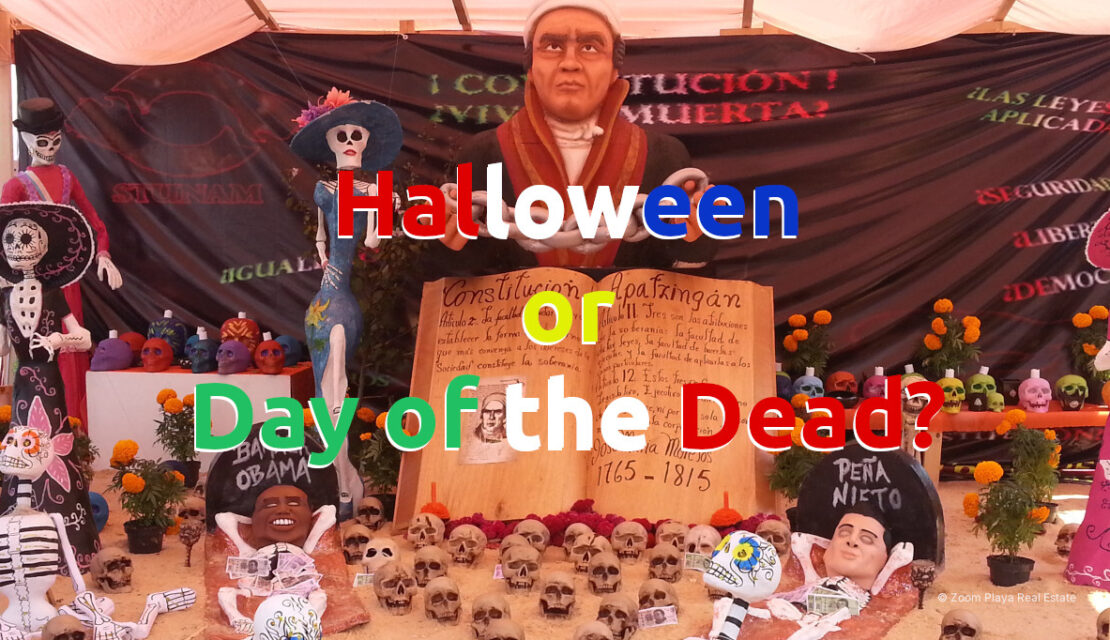
Every October, visitors from the United States and Canada land in Playa del Carmen expecting to find Mexican Halloween — plastic skulls, trick-or-treaters, witches in windows. What they discover, usually around the first of November, is something quite different: tables draped in white embroidered cloth, candles burning for a grandmother who passed years ago, a plate of her favorite food waiting beside her photograph, and a trail of orange marigold petals leading from the street to the front door. This is not Halloween. This is Day of the Dead, and in the Yucatán Peninsula it is called Hanal Pixán — food for the souls. For anyone considering real estate in the Riviera Maya, understanding this holiday is more than cultural trivia — it is the difference between visiting Mexico and beginning to belong here.
But here is the deeper story: almost every culture on Earth has a day — or several days — for the dead. The Mexican Day of the Dead is one bright node in a worldwide pattern. From Celtic Ireland to Buddhist Japan, from Haitian Vodou to Toraja highland Indonesia, from Hindu India to Orthodox Russia, humans have arranged their calendars around the same deep instinct: once a year, open the door and let the ancestors back in. This guide maps that global pattern. It explains where Halloween and Day of the Dead sit inside it, what you will specifically see in Tulum, Cancun, and Playa del Carmen in late October and early November, and why — if you have been thinking about buying a home in this part of Mexico — this is quite possibly the best week of the year to come down and look.
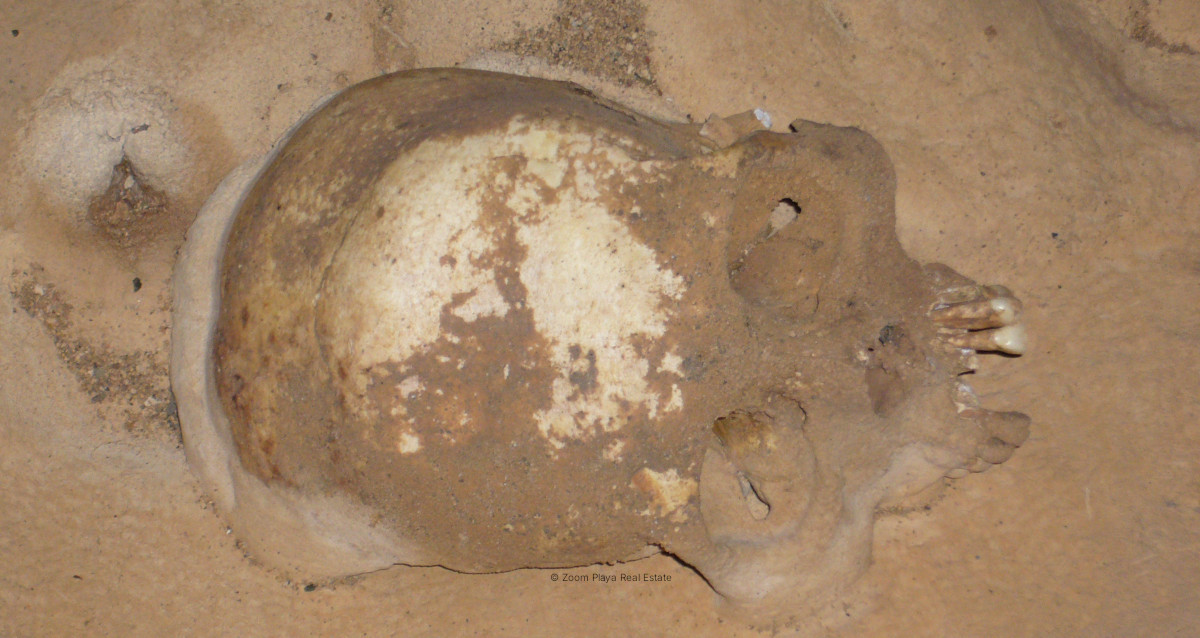
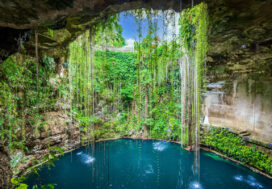
The Actun Tunichil Muknal (ATM Cave) in Belize – Picture by Mike H. Sabet
.
Table of Contents
- A Universal Human Habit
- The October–November Cluster
- The Rest of the Calendar
- The Core Pattern
- What You Will See in the Riviera Maya
- FAQ
- Conclusion
.
.
A Universal Human Habit
Death is the one experience no culture has been able to opt out of, and so, remarkably, no culture has. Every society that has ever been studied — hunter-gatherer, agrarian, industrial — has developed some ritual of remembering the dead. The dates differ. The foods differ. The theology differs. But the shape of the thing is uncannily similar: a day (or several days) when the living stop normal business, bring out photographs, cook favorite foods, light something — candles, incense, bonfires, lanterns — and speak to people who are no longer alive.
Why so universal? Anthropologists disagree about the mechanism, but not about the fact. Grief, left unprocessed, breaks communities apart. Societies that build a shared calendar around remembering their dead — a when and a how that everyone agrees on — hold together better. The holiday is not for the dead, really. It is for the living. It is a maintenance ritual for the social fabric.
What follows is a tour of the biggest and best-documented of these holidays, grouped first by the October–November cluster (which is where our own Day of the Dead sits) and then by the rest of the calendar. The point is not to rank them or claim one is “better” than another. The point is to see the shape of the pattern — and to understand why, if you happen to be in the Riviera Maya in early November, you are standing inside one of the most striking expressions of a very old, very human habit.
.
The October–November Cluster
The densest week on the global death-calendar sits between October 31 and November 2 — the three-day Christian stretch called Allhallowtide (All Hallows’ Eve on October 31, All Saints’ Day on November 1, All Souls’ Day on November 2), layered over far older pre-Christian traditions. This window alone contains Halloween, Day of the Dead, Hanal Pixán, Undas, Zaduszki, Fet Gede, the giant kites of Santiago Sacatepéquez, Sicily’s Festa dei Morti, and the Bolivian Fiesta de las Ñatitas. It is not an accident that so many traditions converge here. The autumn harvest ends. Fields go quiet. Nights grow long. Across the Northern Hemisphere, this is the moment the agricultural year closes, and across many unrelated cultures it has felt, for thousands of years, like the moment the veil thins.
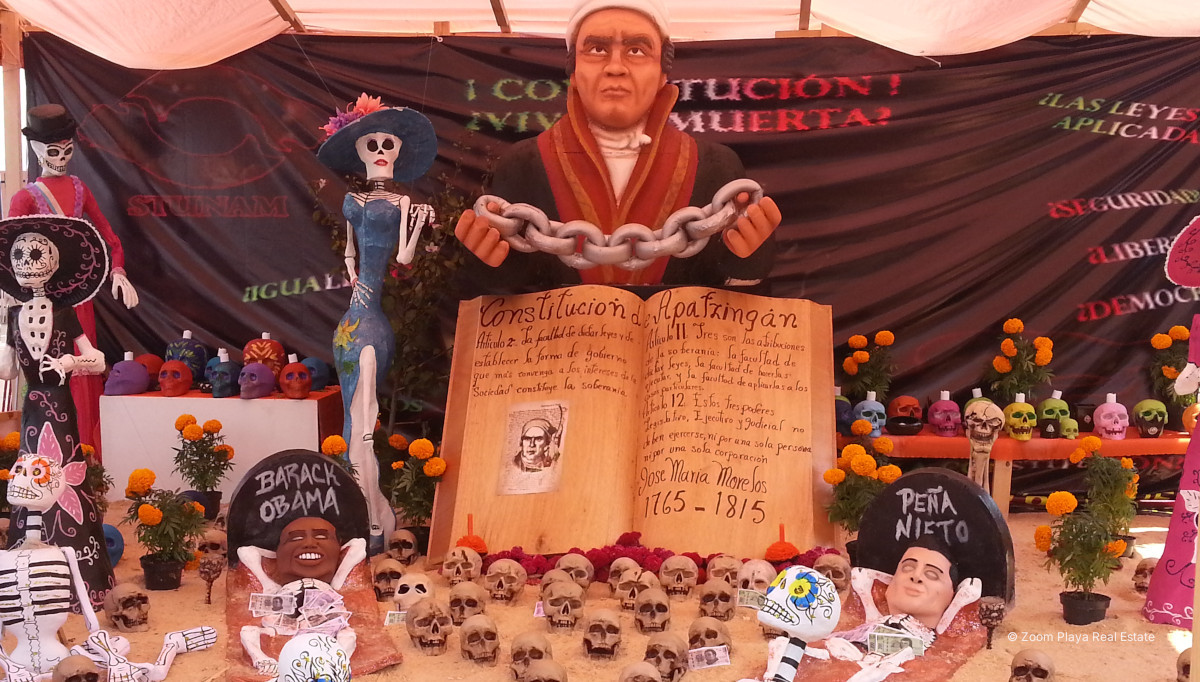
Mexico City Day of the Dead – Picture by Mike H. Sabet
.
Halloween, Samhain and Allhallowtide
The word Halloween comes from All Hallows’ Eve — the evening before All Saints’ Day. In the Christian liturgical calendar it opens the three-day Allhallowtide stretch. The Anglican and Catholic traditions historically treated October 31 as a fast and a vigil — a quiet, prayerful night before the feast of the saints the next morning. Hallow is an old English word for holy; Halloween literally means holy evening.
Underneath that Christian layer sits an older one: the Celtic festival of Samhain, marking the end of the harvest and the beginning of the dark half of the year. In Gaelic Ireland and Scotland, Samhain was understood as a liminal night when the boundary between the living and the dead grew thin. Spirits could cross over. The response was defensive: light bonfires to drive them away, wear costumes to avoid being recognized, carve lanterns from turnips (and later, in North America, from pumpkins) to frighten off wandering souls.
The modern form of Halloween — trick-or-treating, costume parties, haunted attractions, horror films, candy — is largely a 20th-century American reinvention. Irish and Scottish immigrants carried the Samhain customs into the United States in the 1800s; by the mid-1900s the holiday had become almost entirely secular and commercial. Its emotional center remains what it has always been: an evening of controlled, playful fear.
The underlying attitude matters. On Halloween, the dead are a problem to be managed. You disguise yourself so they do not know you. You light a lantern to scare them off. You stay inside, or you turn the fear into a party. Halloween keeps the dead out.
.
Día de los Muertos (Mexico)
Día de los Muertos, the Day of the Dead, is observed in Mexico on November 1 and November 2 — the same two days of Allhallowtide that Catholic Spain brought with it in the sixteenth century. On November 1, families welcome back the souls of children who have died, a day called Día de los Inocentes or Día de los Angelitos. On November 2, the souls of adults return. In both cases the point is not to frighten the dead away. The point is to feed them, speak to them, remember them, and send them off again until next year.
The holiday is syncretic: it blends Spanish Catholic Allhallowtide with pre-Columbian Mesoamerican traditions of honoring the dead. The exact weight of each root is a live academic debate. The historian Elsa Malvido of INAH argued that much of the modern Day of the Dead aesthetic was crystallized in the mid-20th century under the presidency of Lázaro Cárdenas, as part of a broader project of building Mexican national identity around indigenous roots. Other scholars point to continuous pre-Hispanic practices among the Aztecs and Maya and see the modern holiday as a genuine survival. In practice, both are true. The lived tradition today is unmistakably Mexican, culturally rich, and recognized by UNESCO in 2008 as Intangible Cultural Heritage of Humanity.
The holiday is centered on the ofrenda — the home altar — stocked with photographs of the departed, candles, Mexican marigolds (cempasúchil) whose intense scent is believed to guide the souls home, salt and water for the journey, favorite foods and drinks of the dead, perforated tissue-paper banners (papel picado) representing the wind, and pan de muerto — a round orange-blossom-scented sweet bread topped with small dough bones. Celebrants laugh, trade anecdotes, drink the tequila the grandfather liked, write short satirical mock-epitaph poems called calaveras literarias, and keep the children up well past bedtime. Grief is present but it is held gently.
The elegant skeleton figure most associated with the holiday — La Catrina — was created in the 1910s by the printmaker José Guadalupe Posada as a political satire. Diego Rivera later placed her at the center of his 1947 mural Sueño de una tarde dominical en la Alameda Central, and from there she entered the global imagination through Hollywood (the opening of Spectre, 2015) and Pixar (Coco, 2017).
.
Hanal Pixán (Yucatán)
Here is the detail that most visitors to the Riviera Maya miss, and the one that matters most if you are coming to Playa del Carmen, Tulum, or Cancun in early November. What you will see here is not the Oaxacan or Mexico-City version of Day of the Dead that Coco turned into a global phenomenon. What you will see is Hanal Pixán, the Maya version.
The name is Yucatec Maya: hanal means food, pixán means soul. Food for the souls. The celebration spans three days rather than two:
- October 31 — U Hanal Palal: the day of the children’s souls.
- November 1 — U Hanal Nucuch Uinicoob: the day of the adults’ souls.
- November 2 — U Hanal Pixanoob: all souls, often marked by a Mass and a visit to the cemetery.
The signature dish is mucbipollo, also called pib — a large dense tamal made of corn masa stuffed with chicken and pork, wrapped in banana leaves, and baked in an underground oven heated with hot stones. The Yucatán altar is a plain wooden table draped in a white embroidered cloth, with candles, the pib, a cup of atole, a mug of hot chocolate, saints or small religious icons, and the photographs of the departed. The flowers are cempasúchil and flor de mayo (frangipani). The whole feeling is quieter, more intimate, less visual than the postcard versions online — and more moving for exactly that reason.
The largest public event in the region is the Paseo de las Ánimas — the Procession of Souls — held in Mérida on the Friday before November 2. According to the Ayuntamiento de Mérida, thousands of participants dressed in white, their faces painted as Catrinas, walk by candlelight from the General Cemetery along Calle 66 to the Plaza Grande. The whole city, for a few hours, becomes an open-air altar.
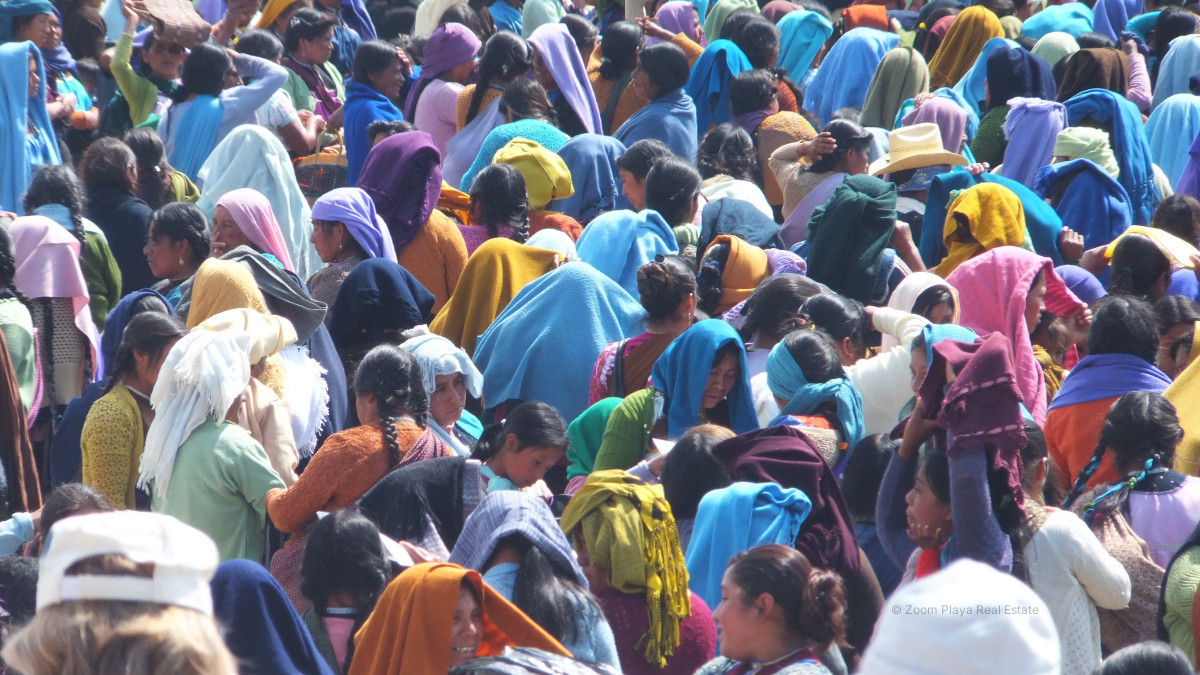
Chamula Chiapas, Mexico – Picture by Mike H. Sabet
.
Undas, Fet Gede, Ñatitas, Zaduszki and the Giant Kites of Sacatepéquez
Zoom out from Mexico and the first week of November looks like a quilt of distinct traditions, all pointed at the same thing.
In the Philippines, Undas runs November 1 and 2. Entire families relocate for a day or two to the cemetery, where they clean, repaint, and decorate the graves of their relatives, then stay all day — grilling food, playing cards, lighting candles until the headstones are rimmed with wax. The scale is enormous: Metro Manila cemeteries receive hundreds of thousands of visitors across the two days. The mood is unmistakably Filipino — equal parts solemn, social, and festive.
In Haiti, the two days are called Fèt Gede — the Festival of the Gede, the Vodou spirits of death and resurrection. Devotees dress in purple and black, pour rum spiked with hot peppers over graves, dance in cemeteries, and let the Gede loa (chief among them Baron Samedi and Maman Brigitte) possess them to speak in cracked, bawdy voices. The tone is more raucous than Mexican Day of the Dead — closer to a carnival, with the dead as the guests of honor.
In Bolivia, chiefly in La Paz on November 8–9 (a week after Allhallowtide), families bring out ñatitas — human skulls, usually kept at home year-round, often inherited and decorated with flowers, coca leaves, cigarettes, and small knitted hats. The skulls are believed to protect the household and to answer questions. On their feast day they are carried to the General Cemetery in La Paz, blessed, and feted. The practice blends Catholic devotion with pre-Columbian Andean beliefs about the power of ancestral remains.
In Guatemala, on November 1 in the town of Santiago Sacatepéquez, families fly giant kites — some over ten meters across, built from bamboo and tissue paper, painted with scenes of Maya cosmology — over the cemetery. The kites are a message to the dead: a signal that the living are still here and still thinking of them. The spectacle is one of the most photographed cultural events in Central America.
In Poland, Zaduszki on November 2 is a national day of cemetery visits. By nightfall Polish cemeteries are seas of candlelight — tens of thousands of individual znicz candles arranged around headstones. The older Slavic practice of Dziady — Forefathers’ Eve, immortalized in Mickiewicz’s play of the same name — survives in folk memory and in Belarus still as an active ritual.
In Sicily and parts of mainland Italy, children wake on November 2 to find small gifts, candies and bone-shaped biscuits (ossa dei morti) left by their deceased grandparents overnight — a Mediterranean cousin of the Mexican offering tradition, with the direction of giving reversed.
Finally, in Southeast Asia, the Buddhist tradition observes Pchum Ben in Cambodia — a fifteen-day stretch ending on the fifteenth day of the tenth month of the Khmer calendar (typically September or October). Families bring food offerings to monks at seven different pagodas across the fortnight, feeding both the Sangha and, through merit transfer, their hungry ancestors. The tradition is one of the most important holidays of the Cambodian year.
.
The Rest of the Calendar
If the October–November cluster is the loudest, it is far from the only one. The global death-calendar is populated year-round.
.
Spring: Qingming and Radonitsa
Qingming, Tomb-Sweeping Day, falls on April 4 or 5 across China, Taiwan, Hong Kong, Vietnam (as Thanh Minh), and the Chinese diaspora worldwide. The day is an official public holiday in mainland China. Families travel — often considerable distances — to ancestral graves, which they clean, weed, repaint, and decorate; they lay out food offerings and burn incense, paper money, and sometimes elaborate paper replicas of modern conveniences (cars, phones, houses) intended for the deceased’s use in the afterlife. The holiday is simultaneously a death-remembrance and a spring outing: families often picnic at the grave site and fly kites on the way home.
In the Russian and Ukrainian Orthodox worlds, Radonitsa — the Day of Rejoicing — falls on the Tuesday of the second week after Easter. Families visit cemeteries, bring Easter eggs and kulich (sweet bread) to leave on graves, and share a meal with the departed. The theological logic is specifically Easter-shaped: because Christ has conquered death, the news is now carried to the dead, and the mood is festive rather than mournful.
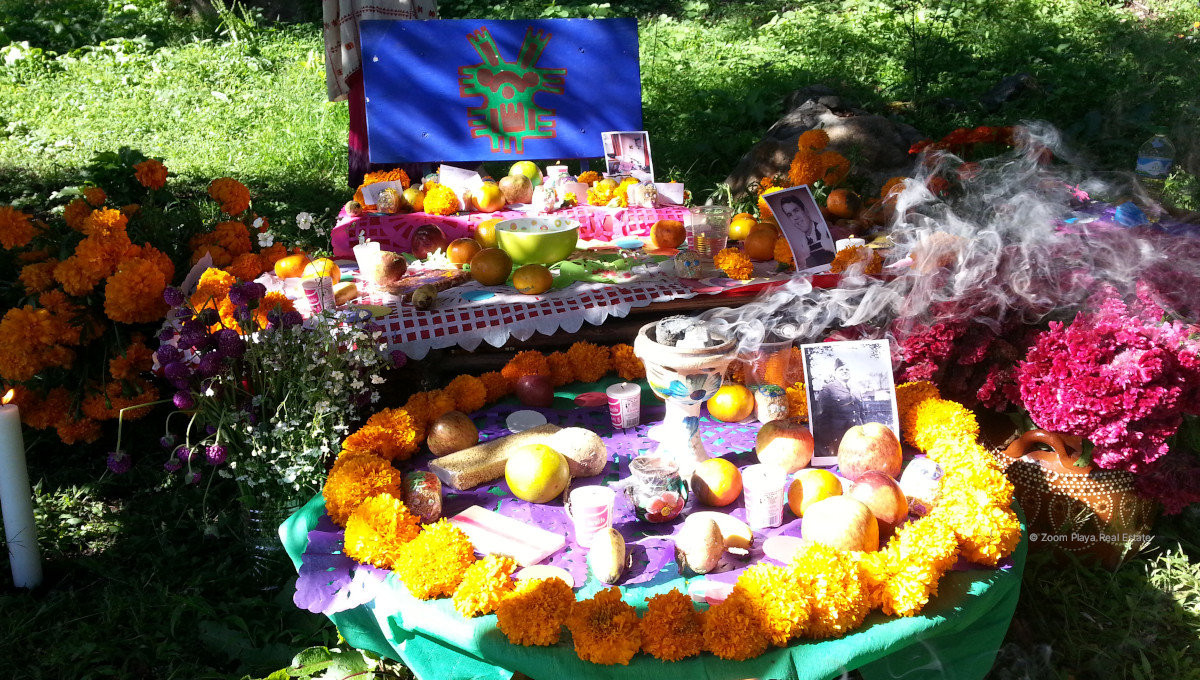
Ofrenda Tepoztlán Mexico on the Day of the Dead – Picture by Mike H. Sabet
.
Summer: Obon, Hungry Ghost, Pchum Ben, Pitru Paksha
The high summer concentrates several of Asia’s largest ancestral holidays. In Japan, Obon falls in mid-August across most of the country (mid-July in parts of Tokyo and the Kanto region). Families return to their hometowns — Obon is one of Japan’s three major travel seasons — clean family graves, hang lanterns to guide the ancestral spirits home, and dance the slow, circular Bon Odori in community gatherings. The holiday closes with tōrō nagashi, floating paper lanterns released onto rivers and sea to carry the souls back.
In China and across the Chinese diaspora, the Hungry Ghost Festival (Zhongyuan Jie) falls on the fifteenth day of the seventh lunar month — typically mid-August. The entire seventh month is considered Ghost Month, when the gates of the underworld are believed to open and spirits roam. Families leave food on street corners, burn incense and paper money, and stage operas and concerts — with the front row of seats left pointedly empty for the invisible guests. In Laos, the related Boun Khao Padap Din rice-offering festival serves the same function in the Theravada Buddhist tradition.
Across Hindu India and Nepal, Pitru Paksha — the Fortnight of the Ancestors — is a sixteen-day lunar window in September-October (the waning fortnight of Bhadrapada). Families perform shraddha rites: offerings of cooked food and sesame-water to three generations of patrilineal ancestors, performed by male descendants and often administered by Brahmin priests at sacred riverbanks — the ghats of Varanasi, Gaya, and Haridwar fill with people during this period.
Nepal adds Gai Jatra — the Cow Festival — which falls in August–September. Families who have lost a loved one in the past year lead a cow (or a child dressed as a cow) through the streets of Kathmandu, in the belief that the cow guides the departed soul to the next world. The procession is openly satirical and theatrical — participants dress as deities, politicians, and clowns — another instance of the global pattern of meeting death with laughter.
In Korea, Chuseok (the fifteenth day of the eighth lunar month, typically September) is primarily a harvest festival but is observed with ancestral charye rites: a carefully arranged food offering performed at home in the morning, followed by a visit to the family grave for seongmyo and beolcho — tomb-sweeping and weeding. It is Korea’s most significant travel holiday.
Among the Zoroastrian communities of Iran and India, Mehregan on October 2 is primarily a harvest festival, but it carries ancestral-remembrance elements and sits at the same calendrical hinge — autumn equinox — that so many other traditions chose for the same purpose.
.
Year-round and multi-year: Famadihana, Ma’nene, Kutkot
Some of the most striking death traditions do not sit on a fixed annual date at all. They are periodic, communal, and deeply physical.
In Madagascar, Famadihana — the Turning of the Bones — is practiced every five to seven years, typically in the dry season between July and September. The ancestors are exhumed from the family tomb, their shrouds unwrapped and replaced with fresh silk, and the remains are carried, danced with, and spoken to before being returned to the tomb. The ceremony is a celebration, not a mourning; it reaffirms the living community’s bond with the lineage.
Among the Toraja people of Sulawesi, Indonesia, the Ma’nene ritual involves periodically exhuming the dead, cleaning their remains, dressing them in fresh clothes, and posing them with their families for photographs before returning them to the grave. The Toraja consider the dead not fully gone until the funeral rites — which can take years to complete — are finished. Ma’nene maintains that bond across generations.
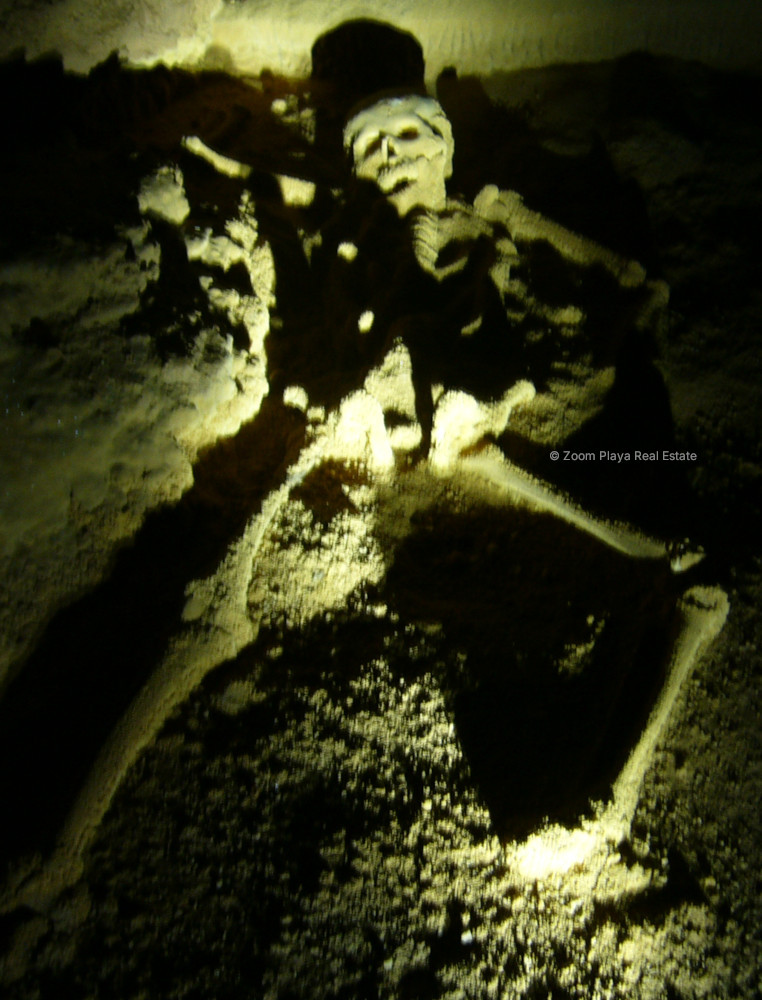
The Actun Tunichil Muknal (ATM Cave) in Belize – Picture by Mike H. Sabet
.
Among the Hanunoo and other Mangyan peoples of Mindoro, Philippines, the Kutkot ritual is a secondary burial: a year or more after the first interment, the bones are exhumed, cleaned, and arranged inside a wooden effigy of the deceased, which is then returned to a cave or ancestral site. The practice echoes similar “second funeral” rites found across Austronesian cultures from Borneo to the Pacific.
And in Germany and parts of Protestant northern Europe, Totensonntag — Sunday of the Dead — falls on the last Sunday before Advent, in late November. Lutheran churches hold services remembering those who died during the past year, and families visit graves one last time before winter. The holiday is quiet, interior, and theologically close to the Jewish practice of Yizkor — the memorial prayer recited at Yom Kippur and the three pilgrimage festivals — which, while not a feast of the dead in the Mexican sense, is the most regular formal remembrance in the Jewish calendar.
.
The Core Pattern
Step back from the individual traditions and the shared architecture is almost impossible to miss. Across cultures that had no contact with each other for most of their histories — Celtic Ireland and Buddhist Japan, Catholic Mexico and animist Madagascar — the same five elements recur:
- A fixed date or lunar window on which the dead are expected home.
- A physical offering — food, drink, flowers, incense — placed somewhere the dead can reach.
- A light — candle, bonfire, lantern — to show them the way.
- A family gathering that extends across generations.
- Permission, often explicit, to laugh — at death, at the dead, at the living — as a way of defusing fear.
The two outliers are instructive. Halloween keeps most of the architecture (date, light, costume, gathering) but inverts the attitude: it treats the dead as a danger to be warded off rather than a family to be welcomed. And modern Western grief — outside the religious observances that survive in it — largely lacks the architecture entirely. The result is a culture that encounters death individually, episodically, and without script. Everyone else on earth has a script.
If you remember nothing else from this tour, remember this: Halloween keeps the dead out. Day of the Dead invites them in. And every other culture on earth has an answer somewhere between the two.
.
What You Will See in the Riviera Maya
For anyone considering a trip to the Riviera Maya in October or early November, this is quite possibly the best week of the year to come. The reasons stack:
- The rainy season has tapered off, so afternoons are clear and the air has lost its summer humidity.
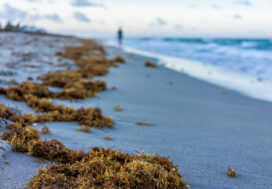
- Sargassum levels are at their annual low — the summer brown-seaweed waves are gone and the beaches are back to turquoise.
- High-season tourist crush has not started. Christmas and New Year are still two months away. Flights are reasonable. Restaurants have tables. Guides are available.
- You will see the region at its most culturally alive — Hanal Pixán ofrendas on street corners, children in Catrina paint, music drifting out of plazas after dark.
A practical note: if you want to experience Hanal Pixán rather than just see photos of it, stay in the pueblo of whichever town you choose, not the hotel zone. The hotels will put up a photogenic altar in the lobby and that will be the extent of it. The real celebration — the family gatherings, the home ofrendas, the candlelit cemeteries, the children going house to house in Catrina paint — happens in the inland parts of town where locals actually live. In Playa del Carmen that means anywhere south or west of Avenida 30. In Tulum that means Tulum pueblo, not the beach road. In Cancun that means downtown, not the Hotel Zone.
Closer to home, you can find Hanal Pixán in:
- Playa del Carmen — public ofrendas on 5th Avenue and at Parque Fundadores, with evening performances and children’s programming.
- Cancun — a community altar in Parque de las Palapas; downtown rather than the Hotel Zone.
- Tulum pueblo — small, intimate ofrendas set up by neighborhood families. The experience here is less staged than in Playa, more domestic.
- Valladolid — perhaps the most authentic small-town celebration within easy reach, two hours west of Playa.
- Isla Mujeres and Puerto Morelos — small-town ofrendas near the central plaza, candlelit in the evening.
- Mérida — the Paseo de las Ánimas, a three-and-a-half-hour drive from Playa, is the largest public death-remembrance event in southern Mexico.
And if a trip like this is already on your mind as a scouting visit — not just a holiday, but a chance to walk through neighborhoods you might one day call home — this is the week that reveals the Riviera Maya at its most honest. The beaches sell themselves in any season. What late October and early November show you is the culture that will be your neighbor if you decide to live here.
.
Frequently Asked Questions
Do all cultures have a day for the dead?
Nearly every culture that has been systematically studied by anthropologists has some form of ancestral remembrance ritual — either on a fixed annual date, a lunar window, or on a periodic cycle of several years. The specific holidays differ enormously; the underlying pattern (fixed date, offering, light, gathering, permission to laugh) is remarkably consistent across cultures that had no historical contact.
Why do so many of these holidays fall in late October and early November?
Two overlapping reasons. First, the Catholic Church’s Allhallowtide (October 31 – November 2) was carried by Spanish and Portuguese colonization to every continent, where it fused with pre-existing local traditions. Second, in the Northern Hemisphere the end of the harvest and the shortening of days has felt — across many unrelated cultures — like the moment the veil between living and dead grows thin. The Celtic Samhain, the Mesoamerican autumn death rituals, and the Christian liturgical calendar converged on roughly the same week independently.
Is Day of the Dead the same as Halloween?
No. They fall in the same three-day window (October 31 to November 2) and share a distant Christian root in Allhallowtide, but they are different holidays with opposite attitudes toward the dead. Halloween wards the dead off; Day of the Dead welcomes them home.
When is Day of the Dead in 2026?
Sunday, November 1 (Día de los Angelitos — children’s souls) and Monday, November 2 (Día de los Muertos — adults’ souls). In the Yucatán, Hanal Pixán observances begin on Saturday, October 31 with U Hanal Palal.
What is the difference between Day of the Dead and Hanal Pixán?
Hanal Pixán is the Yucatán Maya version. It spans three days (October 31 to November 2) rather than two, uses a wooden table with a white embroidered cloth rather than a multi-tiered altar, features mucbipollo as its signature food, and has a quieter, more family-centered atmosphere than the central-Mexico version shown in Coco. If you are in the Riviera Maya, Hanal Pixán is what you will actually see.
Where in the Riviera Maya can I experience Day of the Dead?
Public ofrendas in Playa del Carmen (5th Avenue and Parque Fundadores), Cancun’s Parque de las Palapas, Tulum pueblo (not the beach zone), Puerto Morelos and Isla Mujeres central plazas, and Valladolid — two hours west and perhaps the most authentic small-town celebration within easy reach. The region’s largest public event is the Paseo de las Ánimas in Mérida, roughly a three-and-a-half-hour drive from Playa.
Is it respectful for tourists to participate?
Yes, when done with care. Visiting public ofrendas, attending the Paseo de las Ánimas, and even having your face painted as a Catrina at a sanctioned event are welcomed. What is not welcomed: entering private cemeteries uninvited, photographing families at private ofrendas without asking, or treating the holiday as a costume-party setting for Instagram. The simple rule is the one that governs any religious or family event — observe, participate when invited, do not treat the sacred as a backdrop.
Is Day of the Dead a sad holiday?
No. Grief is present but it is held gently. Families laugh, trade stories about the departed, drink what their relatives liked to drink, and encourage children to meet grandparents they never knew. The Mexican cultural attitude toward death is less afraid than the North American default, and the holiday is one of the clearest expressions of that difference. It is tender, not grim.
.
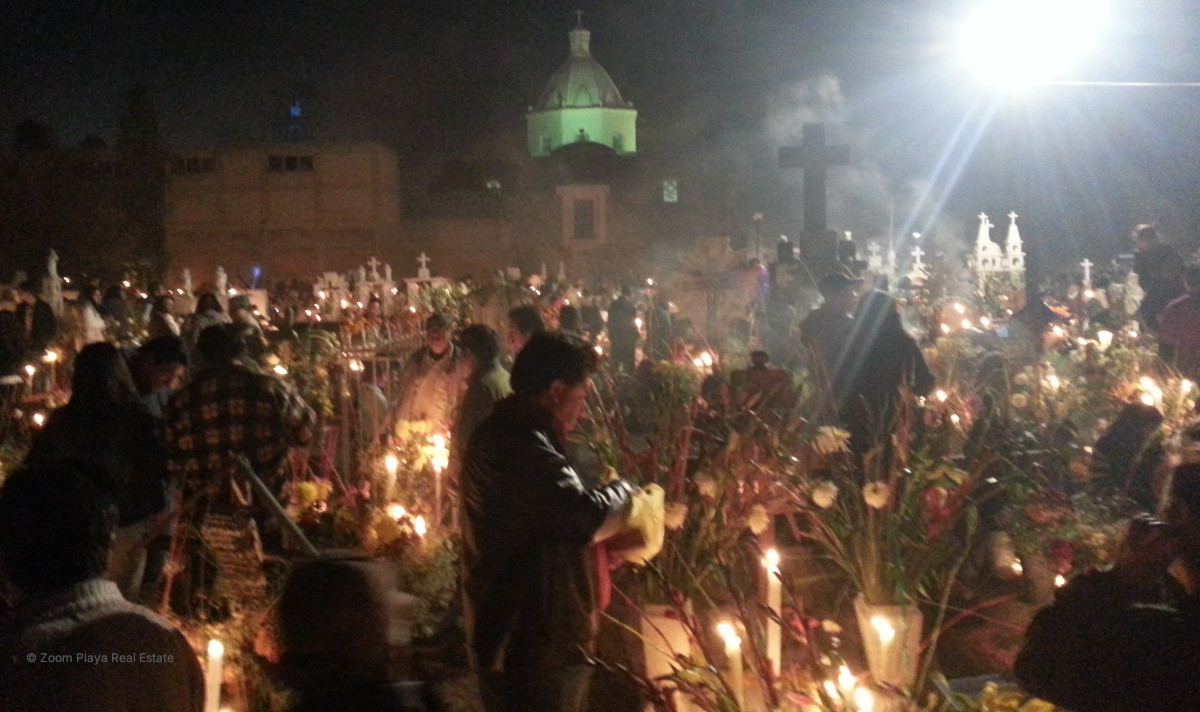
Mixquic Mexico City Day of the Dead – Picture by Mike H. Sabet
.
Conclusion
Halloween and Day of the Dead occupy the same corner of the calendar but they are two expressions of a much larger human habit. From Celtic bonfires to Japanese lanterns, from Haitian Vodou drums to Madagascan silk shrouds, from Polish candles to Guatemalan kites, every culture on earth has found a way to say the same thing: the people we have loved and lost are not entirely gone, and once a year — or every few years — we would like to see them again. The Riviera Maya’s answer to that universal question is Hanal Pixán, food for the souls, and if you are lucky enough to be here for it, you will see something you will not forget.
If you have been thinking about the Riviera Maya as a place to live — not just visit — the first week of November is the week to come down and look. The beaches are quiet, the weather is at its best, and the culture is out in the open where you can see it. We would be glad to show you around.
Browse condos and homes for sale across the Riviera Maya, or get in touch with the Zoom Playa team to plan a scouting trip timed to Hanal Pixán 2026. Experts since 2018. Free buyer support.